Showing posts with label bike. Show all posts

Thursday, 12 July 2012

Importance of Lights

As we in Brisbane are in winter this post seam totally appropriate.

One of the things I hate is people that ride without lights at night. There is nothing worse then coming around a dark blind corner ringing your bell and almost hitting some ninja twit. It is not only important to ride with lights at night is also a legal requirement in Queensland. I have been watching bike lights getting cheaper and cheaper in the last 5 years. They really are amazing what you get for $50 these days. Years ago I got one Headlight and Tail for around $65. They were good for there time but they were nothing great and they were not lights that could really be used in the dark paths that scatter the city if you intended to travel at normal speed.

It was often the case that if I hit a bump with the headlight on it would turn off. I would then be forced to bash the thing with my fist (like some mad cartoon character) and hope the thing would turn back on will still travelling at speed. Then there was the rear light that also if I hit a bump after a while would fall out. I would often be listening out for the familiar sound of plastic hitting bitumen and slam the brakes on and do a quick U turn. Then pull the head light off and start looking for the bits to put back together and start off again, hoping that in the mean time a car did not come along and crush the parts.


That was then and this is now. Since then the lights have not just got better but so have the mountings that hold them to your bike. All my current lights have mountings where the lights slide on and click into place. Because this is Australia my lights are all battery powered. One day I will get around to fitting a hub dynamo but for the time being I will live with battery. Now this is a point people complain about, replacing batteries because after a few months the cost will mount up. I have gotten around this problem by using rechargeable batteries. Rechargeable batteries are not as expensive as they use to be and the quality has improved as well. In reality today you can pick up a charger and 4 batteries for less then $30s. When you consider some single use batteries are almost $10 for a 2 pack, rechargeable start to make financial sense very quickly.


These are my lights attached to my bike. As you can see is I have both two front and two back lights. Like I said before we run on batteries in Australia and this means you can have flat batteries more often then you wish to. This is something you do not want to happen on a wet night. To get around the flat battery problem I got two of each. It means I never worry about not having a light but two other things
  • First I never worry about recharging until the battery is dead flat
  • Second while the batteries are sitting in the recharger at home I still have one working front or rear light.
The other advantage of having two lights is your light output is doubled which for some reason makes things more than twice as easy to see. The other thing you will see is that the lights have been mounted in a way in which the reflector still functions. This is not only also a legal requirement but is backup in the event of both lights failing.

 Like I said I hate when people ride without lights. I bought my lights at local Bike shop because of the warm fuzzy feeling thing but if you really want to get them for as little as possible here are a couple of links.
Come on you will be doing everyone a favour if you are illuminated.

http://www.chainreactioncycles.com/Categories.aspx?CategoryID=679
http://www.wiggle.co.uk/light-sets/?o=1

PS. Oh yes I do have two floor pumps in the background

Monday, 18 June 2012

Kickstands - My unreal bikes

Like mudguards (in a previous post) kickstands are not something you commonly see on bikes these days in Australia. There is in fact this saying these days around kickstands that "A real bike doesn't have a kickstand".

Just like mudguards, kickstands seam to of fallen out of favour, some time when people stopped using bikes for real trips. Almost every bike that it is sold through bike shops (a branded bike) in Australia is devoid of these very simple and practical pieces of equipment. This is quite strange as almost every bike sold through the supermarket department stores has a very cheap kickstand attached to it. This could be the basis of the "unreal" saying as many people that regularly ride bikes call the supermarket bikes a BSO or "bicycle shaped object" in other words not a real bike. I find it funny that a supermarket bike will have a kick stand but not a branded bike. Even the branded bikes that are being sold as utility/city bikes seam in most cases to be devoid of them. I could go on in my theory of how this has happened but the simple fact is that it has happened this way.

When I got my first branded bike I was surprised to find no kick stand, how was the thing going to be stored next to the door in my unit without it falling over. I quickly had that fixed when I got it back from it's first (6 week) servicing. Since then I have bought two more branded bikes and both have been fitted with kickstands before I even picked them up. It is always quite interesting the reaction you get from a bike shop assistant when you inform them that you wish your new bike to have a kickstand. Some don't blink an eyelid while some look a little surprised. My current bike is fitted with disc breaks which made a challenge for fitting a kickstand but one was fitted as you see down below.

The reasons for having a kickstand are quite simple. They stand your bike up. This means storing your bike in your home is very easy, mine live near the front door in some dead space that could be used for nothing else. As well as making things simple at home it makes it easy to store your bike when you are out. Everyone has seen the a bike in Australia that is locked to a poll but has fallen over and is laying on the ground. While this is still possible with a kickstand it is less likely. It also means that when locking up the bike when out you do not need to lean it against something so less chance of scratches on the paint work. There is also the times when you are out riding you can stop have a look at something without having to lye your bike on the ground.

When I look over in Europe at the countries that still use the bike for transport the kickstand is alive and well. I love my "Unreal" bikes with there kickstands and I would not been seen on a bike without one.

My first Branded bike now the spouses bike, This kickstand has a twist adjusted

My current bike. The kickstand is only attached to the chain stay due to the disc brakes. This is possible on this bike due to the tubing being rectangular in profile. It is not ideal but it works. The adjuster on this kickstand is via a screw that can not be seen.


Monday, 4 June 2012

Electric Bikes - Pedal only now

http://www.minister.infrastructure.gov.au/ck/releases/2012/May/CK013_2012.aspx

The rules regarding electric bikes are changing and changing for the better in my view. Now let me first state I have no problem with electric bikes. I think they help people that may be becoming a bit frail or need to get somewhere without getting there to sweaty but there have been problems with them in Australia. The main thing is that I have always believed when it came to electric Bikes is that they are to be a bicycle first, not a motorbike. Therefore the person is the main power source first and electric second.


Throttle is gone and I am glad.
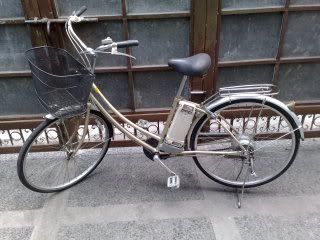
Most E-bikes that were sold in Australia were of appearance to the bike shown above. The difference between the bike shown above and the ones sold in Australia is most of them are throttle assist (or so called assist). As I said above I believe a bike should be a bike not a motorbike. In most cases that I have witnessed throttle "assist" turned a bicycle into a low powered motorbike. Most times I have seen throttle E-bikes in Brisbane the rider has been no pedalling at all and letting the motor do all the work. This gives no benefit to the person riding it and has caused problems. Unlike true motorbikes many of these throttles did not go back straight to neutral if pressure was released. This has meant that they can be tricky to operate.

Pedal Assist the only way
From now on all new E-bikes are to be pedal assist only. This means only when the rider starts to pedal will the motors (assist) will kick in. This means there is to be no more "NEW" people rolling along without doing any work. That said the most important part is that pedal assist is not tricky. A pedal assist E-bike is as easy to ride as normal bike the only difference is before pedalling is you set a dial to how much help you get. This means when you stop pedalling the motor stops. This is extremely important if you have to do an emergency stop.

I have tried both forms and I have to say I hated the throttle assist. I found it tricky to use and stopping was not easy. The pedal assist was a dream. I started to spin the pedals and I was off with all the control a normal bike gave me of starting and stopping.

Increased power
The maximum power output of E-bike has also changed. It was 200W it will now be 250W while I am not a fan of this on the power grounds it does have a very important benefit. European E-bike can be imported almost directly into Australia now. This means high quality European models will now be available to the Australian market.

I have to say I like the changes and welcome them. Bring on the Pedal Assist Cyclists of Brisbane.

Tuesday, 24 January 2012

Mudguard Sydrome

I have to say today in Brisbane was one of those few days where it was so wet that I really should not of ridden to work but oh well. My otherhalf had infact said to me just before leaving that I should catch the BUZ "but the rain has stopped". In short I got drowned but why did I still ride and still take the risk of getting wet? I have mudguards.

Mudguards are one of those things that are no longer standard on bikes and they really should be. It is something they confuses baby boomers because when they rode bikes before they bought there cars (the reason why bikes declined) every bike had them. Because of this in general they are seen as something of the past and very uncool. This is slowly changing with more bikes now being sold with them but these are still very much in the minority with most people like myself have to retrofit there bikes. This is even when there bike is marked as an urban Machine.

So why did they disappear. This is quite simple people stopped using bikes for what there main purpose is transport. You see if you use something for transport it has to go through fine weather and wet weather. This meant the need to stop spray off the road onto the rider but when cycling became something of a sport or a thing of recreation who would be out in the wet? There is also that mudguards would never of been fitted to sport bikes. When you are trying your best to bet the guy next to you you do not need this tiny sail down on your wheel slowing you down. Once cycling became more of a sport people wanted bikes like those and that meant no mudguards.

So whats so good? Well the first thing is you don't get wet. You may say big deal you will still get wet from the rain. This I have to say on most wet days is a misconception. Unless the rain is constant or hard you will get more water sprayed up onto yourself from the road then you will get from the sky. Waters not that bad! this is very true but it is the things that mix in the water that you may not like to taste being thrown up in your face, think dog poo and engine oil. Then there is the fun side like being a child again and riding through poodles. There is no greater fun then blasting through water and coming out the other side with minimal water on yourself while some other poor bugger cops a face full of water, mud and what ever else is in there. In short a Mudguards allow you to continue riding in must weathers.

Now the Bad! So far I there is only one thing that I do not like about Mudguards is the sail affect. Due to the shape of mine they do catch the wind, and this may increase your travel time but this is only minimal. This can be reduced by insuring that the width of your mudguards match the width of your tyres.

So what to look for?
1st - There are many guards out on the Market but like many other commuter cyclists I prefer the classic full length design. These will offer the best protection and are the most stable. Some other types can fail and rub on the tyres.
2nd -  Bikes generally come in two wheel diameters 700c and 26inch. 700C is generally road to hybrid bikes while 26inch is mountain bikes and supermarket specials. Always check what wheel size you have beforehand.
3rd - Tyre Width can be a big problem if you buy a Mudguard for a road bike and you have a hybrid. While the opposite will work you then have the sail factor. Ensure your guard is designed for your preferred tyre width. Guards should be close but not to close.
4th - Material can be a factor if the bike is going to get knocked about. The guard needs to be strong enough that if the bike falls down they will not bend. My current guards are plastic and were off my old bike that went through the accident. Apart from a bend in one of the support arms they are fine.
5th - It is not uncommon that some Mudguards have very weak support arms and fixings. Make sure your guards will not generally move about and touch the tyre otherwise there could be an accident.

I would not be without Mudguards now and if really want to ride as much as possible I suggest giving them ago. You will no regret it and the memory of road spray quickly becomes a thing of the past.

Saturday, 7 January 2012

Tyres - for commuting

I would like to point out this is not an ad for the brand of tyres I use more to stress the importance of tyres that are puncture resistance.

As I have stated earlier I have been riding for close to 10 years as a form of transport and if there is one thing that will kill it for you it is a flat tyre. We all know the story of the motorist with a flat but there is a slight difference, they carry a spare, cyclists well not truly practical. There are the ones that say you can carry a spare tube but come on be practical! I do not want to be on the side of a narrow path (hopefully not blocking flow) desperately trying to get the tyre off then a tube out then pumping it back up with a Mini-pump that in all accounts will only get the PSI of the tyre back up to 20. That is not me and it is not what most people that intend on riding to work wish to be doing. What is needed is a tyre that can run over broken glass and keep going and going.

Mid-last year my old bike failed and broke while I was riding it. It would of been a terrifying moment if I could remember it, I blacked out. Then again it might of had the same thought I had on the last accident "not again". To that I went out and bought a new bike, "get straight back on" as the saying goes and I have done that.

Tyres! the machine I bought is marketed as an urban machine with puncture resistant tyres. While I would of still bought it if it did not come with puncture resistance tyres, I would od bought replacements. I had been running with "Specilized Armadillos" for the last four years and had not had a single puncture. It would not be uncommon for me to sit down at the end of a work day every six months and so and pick bits of glass out of the tyres. The rubber on these tyres is very tough and even if it gets into that there is another layer of material to prevent material from reaching the tubes and causing a flat.

Well! After having the new bike for just two weeks the first wet day happened. Everyone that rides a bike hates wet days for one reason or another, generally I don't. That said I had a bad feeling I had noticed as soon as I got the bike the tyres just looked that bit to soft, not puncture resistant at all. As wet roads softer tyres rubber and move glass on the road about I had the worst feeling that a puncture was going to happen. Sure enough it did less then two kilometres into the ride. I heard the glass before I heard the wizzzzz of escaping air. With that I knew I had the fun of the walk home and then of being an hour late for work, NOT IMPRESSED.

What to do! The first thing to do was to order some Armadillos. Well to be correct a single Armadillo. Most punctures occur in the rear tyre not the front so as not to waste the existing tyre it would become the spare for the front which would also remain to run out it's life. Armadillos have a long running life of over 10000kms due to the hard rubber used.

There are some complaints regarding such long lasting tyres. The first is ofcourse grip, due to use of harder rubber grip has been reported as a problem, this is understandable but to the best of me I have not had a problem. The other thing is if it is a problem maybe you are taking a bend to fast. It is not uncommon for me to see riders take bends with there body 45 degrees to the road surface. I would say that is to fast because all you need is one rock and off you slide. Take the bend slower and focus on accelerating quicker. The second complaint regarding puncture resistant tyres is they are hard to get off and on the wheel rim. This argument I have to say is a contradiction in itself. I agree it was hard getting the new Armadillo on even with the tools to do the job but the fact is if tyre is puncture resistant you will not have to take it off the rim until it is needing replacement. Far better to pull a tyre off once a year or more then once every few weeks and waste time repairing and replacing damaged tubes. The final complaint is they don't roll as well. This I do agree with. I have found they I do not accelerate quite as fast as with the other tyre but have not had it increase my travel time to work. Once again this comes down to cost/benefit ratio! Even if it was taking me a little longer to get to work each day say a minute it is better to get to work a little slower with a regular travel time then every few weeks turning up 10 or 20 minutes late or in my case 1hr late.

So what to do if you have a bike with non-puncture resistant tyres.
1st - weigh up the benefits of non-puncture and puncture resistant tyres
2nd - Do your research, I have named one brand but there are others
3rd - replace the rear tyre. Rear tyres are more likely to get a puncture and use the remaining tyres on the front wheel until they are worn out. Then when needed replace the front as well.

Like I said at the start you may not mind carrying all the equipment with you but if you are like me and just want to get to places with minimal worry I would have say invest in some puncture resistant tyres, They make life so much less stressful